Most businesses already use AI in some form.
Teams generate content with it.
Summarize meetings with it.
Research faster with it.
Draft emails, reports, and responses with it.
And for a while, that feels productive.
But eventually, a different problem starts appearing.
The AI generates the output.
Then someone still has to move the work forward manually.
Copy the response.
Paste it into another system.
Update the CRM.
Send the follow-up.
Create the task.
Notify the team.
The thinking becomes faster.
The execution does not.
This is where most businesses hit the real limitation of AI adoption.
Not because the models are weak.
Because the workflows around them are still fragmented.
And that’s exactly what AI integration is meant to solve.
AI integration is not about adding another AI feature into your stack.
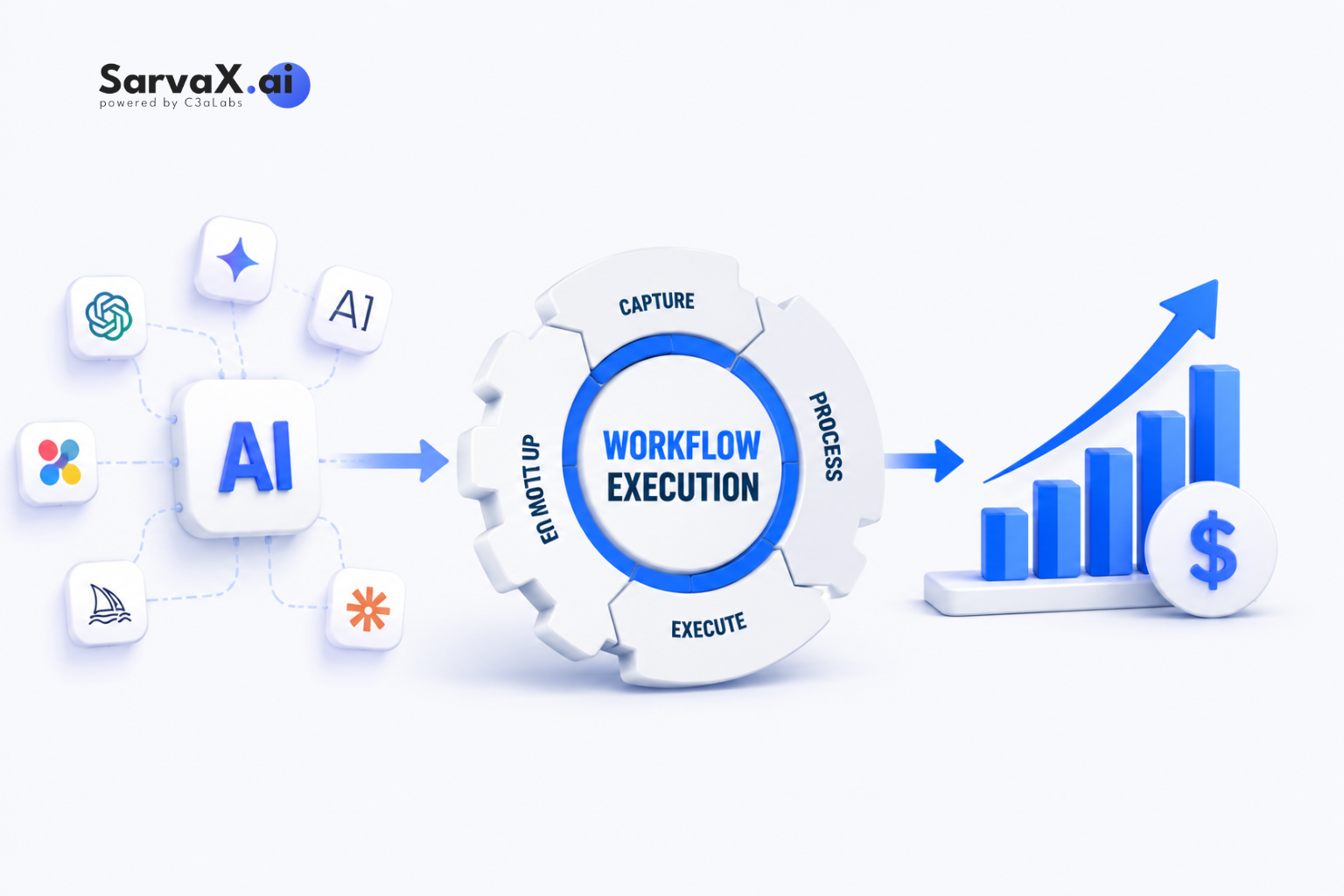
It’s about connecting AI directly into the flow of work so execution happens continuously instead of manually.
That’s the real shift.
Why Most AI Usage Breaks at the Workflow Level
Most teams are not actually operating AI systems.
They are operating disconnected AI moments.
A prompt here.
A response there.
A manual handoff afterward.
At first, the friction feels small.
But once AI usage becomes part of daily operations, the inefficiencies compound quickly.
Teams begin spending time:
- switching between tools
- rewriting context
- manually coordinating actions
- repeating workflows
- transferring outputs between systems
The result is operational fragmentation disguised as productivity.
AI helps teams think faster.
But the business still executes manually.
That creates what many organizations are now experiencing internally:
an execution gap between AI outputs and real operational movement.
And the larger the organization becomes, the more expensive that gap gets.
What AI Integration Actually Changes
AI integration changes where AI exists inside the workflow.
Instead of AI sitting outside the business waiting for prompts, it becomes connected directly to operational systems.
That means workflows begin responding automatically to real business events.
A meeting ends.
The system generates structured notes, follow-ups, tasks, and CRM updates automatically.
A support ticket arrives.
The workflow classifies urgency, drafts a response, updates records, and routes the request instantly.
A new lead enters the pipeline.
The system enriches context, qualifies the lead, triggers actions, and alerts the right teams.
The important shift is this:
The work no longer depends entirely on someone manually moving information between systems.
Execution becomes connected.
The Real Problem Businesses Are Facing
Most businesses do not have an AI problem.
They have a workflow coordination problem.
The systems inside the organization are disconnected:
- CRM in one place
- meetings in another
- tasks elsewhere
- communication scattered
- approvals fragmented
- operational visibility limited
So even when AI produces useful outputs, the organization still struggles to operationalize them consistently.
That’s why many companies feel disappointed after initial AI adoption.
The outputs improve.
But the operational structure underneath stays the same.
AI Integration Is Really About Workflow Continuity
The most important thing AI integration creates is continuity.
Without integration, workflows constantly break between steps.
Someone has to:
- remember context
- trigger actions manually
- coordinate systems
- update records
- maintain operational flow
That creates invisible operational drag.
AI integration reduces that friction by ensuring work continues automatically after an event occurs.
The workflow keeps moving.
Not because people are constantly coordinating it manually.
Because the systems themselves are connected.
How AI Integration Actually Works
At a technical level, AI integration follows a structured operational flow.
Every workflow begins with a trigger.
A new customer inquiry.
A completed meeting.
A support request.
A file upload.
A status update.
That event activates the workflow automatically.
From there, the system prepares the necessary context:
customer history, CRM data, metadata, previous interactions, internal rules.
Then the workflow routes the task to the appropriate AI model.
This is important because different workflows require different capabilities.
Some tasks require:
- reasoning
- structured extraction
- speed
- classification
- summarization
- compliance handling
The workflow then converts AI outputs into structured operational objects:
- CRM entries
- tasks
- reports
- workflow updates
- approvals
- notifications
Finally, the system executes actions automatically across connected tools.
The important thing is not the AI responsew itself.
It’s that the workflow continues operationally after the response is generated.
Why AI Integration Is Different from Using AI Tools
Most AI tools still operate in isolation.
They assist with:
- writing
- brainstorming
- summarization
- research
But they stop before execution.
AI integration goes further.
It connects AI directly into operational systems so that:
- workflows continue automatically
- systems stay synchronized
- outputs become actionable
- execution becomes observable
- coordination becomes scalable
This changes the role of AI inside the organization.
From:
AI helping individuals perform tasks
To:
AI helping the organization execute workflows continuously
That’s a completely different operating model.
Where AI Integration Creates The Most Value
AI integration works best in environments with repetitive operational workflows.
Especially where teams constantly move information between systems.
Customer support is one example.
Requests arrive continuously.
Context must remain connected.
Responses need coordination.
Systems require updates.
Without integration, teams manually manage each step.
With integration, workflows maintain continuity automatically.
The same pattern appears across:
- sales operations
- internal coordination
- reporting workflows
- onboarding
- compliance processes
- meeting execution
- project management
The bigger the workflow volume becomes, the more valuable integration becomes.
Because operational consistency begins scaling with the business.
Why AI Orchestration Matters
As workflows grow, organizations eventually realize a single AI model is not enough.
Different tasks require different strengths.
Some models perform better at reasoning.
Others are faster.
Others handle structured outputs more reliably.
This is where orchestration becomes important.
AI orchestration acts as the coordination layer between:
- workflows
- business rules
- AI models
- operational systems
Instead of treating AI as one assistant, organizations begin treating it as an execution infrastructure layer composed of specialized systems.
That’s how enterprise AI begins scaling properly.
Why Many AI Integration Projects Fail
Most AI integration failures happen because companies approach automation too aggressively too early.
They try to automate entire organizations immediately.
But successful integration usually starts much smaller.
One workflow.
One operational problem.
One repeatable process.
The companies that succeed focus first on:
- workflow clarity
- structured inputs
- operational visibility
- governance
- execution reliability
Because without structure, automation simply scales chaos faster.
The Companies Winning with AI Are Building Execution Systems
The businesses seeing the strongest AI outcomes are not just deploying tools.
They are redesigning how operational work flows through the company.
Meetings connect to tasks.
Tasks connect to approvals.
Approvals connect to systems.
Systems maintain continuity automatically.
The result is not just efficiency.
It’s operational coherence.
And that’s where AI starts becoming infrastructure instead of software.
Final Thought
AI integration is not really about prompts.
It’s about execution.
If teams are still manually moving outputs between systems, coordinating workflows through memory, and constantly rebuilding context, then AI is only solving a fraction of the problem.
The real value appears when AI becomes connected directly into operational workflows.
When systems trigger actions automatically.
When workflows maintain continuity.
When execution happens without constant coordination overhead.
That’s the shift from isolated AI usage to operational AI infrastructure.
And that’s what AI integration actually makes possible.
SarvaX.ai helps businesses connect AI directly into operational workflows across meetings, CRM systems, tasks, approvals, and business execution.
Instead of using AI in fragments, teams can build connected systems where conversations, workflows, and actions move together automatically.
So AI no longer stays isolated inside prompts.
It becomes part of how the business executes work every day.